Innovative designs that have made the Thunder name known across Japan.
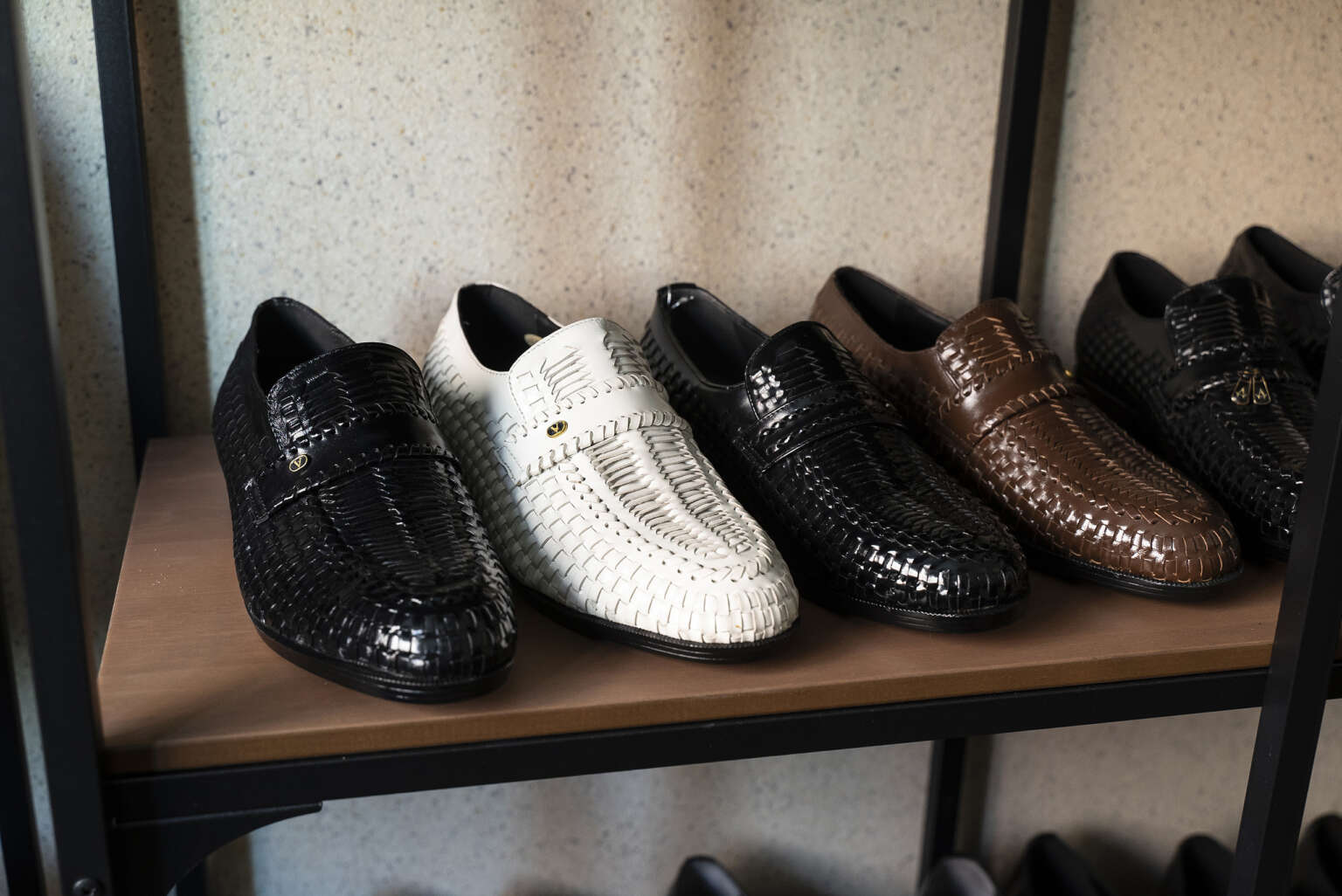
Thunder Trading's roots go back to 1966, when chairman Toyozo Todoroki began making shoes — packing leather shoes onto a bicycle and selling them on the street. Because everything was done by hand he could sell only a few pairs a day, and he spent his nights making more to sell the next day. That effort paid off: in 1971 he founded Thunder Shoes Co., Ltd., the predecessor of Thunder Trading. The pantaloon shoes developed in this era became a smash hit, the TV commercials were everywhere, and the brand swept the country. On the back of that, the Thunder Shoes name reached every corner of Japan, and the company grew popular enough to open retail stores along Asakusa's Shin-Nakamise Street and outside Koiwa Station. In 1977 the company took its current name, Thunder Trading Co., Ltd., and its run of innovation continued. The next hit was the mesh shoe — leather woven strand by strand with care — which earned widespread praise and ushered in big orders and volume production. That is how the foundation of the Thunder Trading we know today was laid.
Four well-regarded brands, each at home in a different setting.
Today Thunder Trading produces original shoes for major footwear brands and apparel retailers while running four in-house brands of its own.
Brand one is 〈CHRISTIAN CARANO〉. Built on elegant designs with European inflections, it adds practical functions such as water-repellent treatment and cushioning. It is well suited to business and dressed-up occasions, and easy to pair with casual outfits too.
Brand two is 〈VALENTINO GLARIO〉, a long-running line of business shoes that uses high-quality genuine leather while keeping prices accessible — now a best-seller in its third decade. The range is broad, taking in moccasins, loafers and boots, and each pair distils the maker's craft and care. Many wearers have stuck with the brand for years.
Alongside its leather-shoe lines, Thunder Trading also runs a sneaker brand. 〈ARAGIN〉, as the name hints, is built on themes of youthful adventure and play — its forward-looking designs are backed throughout by the technical know-how and quality of a shoemaker that knows the Japanese foot inside out. It is a brand where high-grade leather and real comfort make themselves felt straight away.
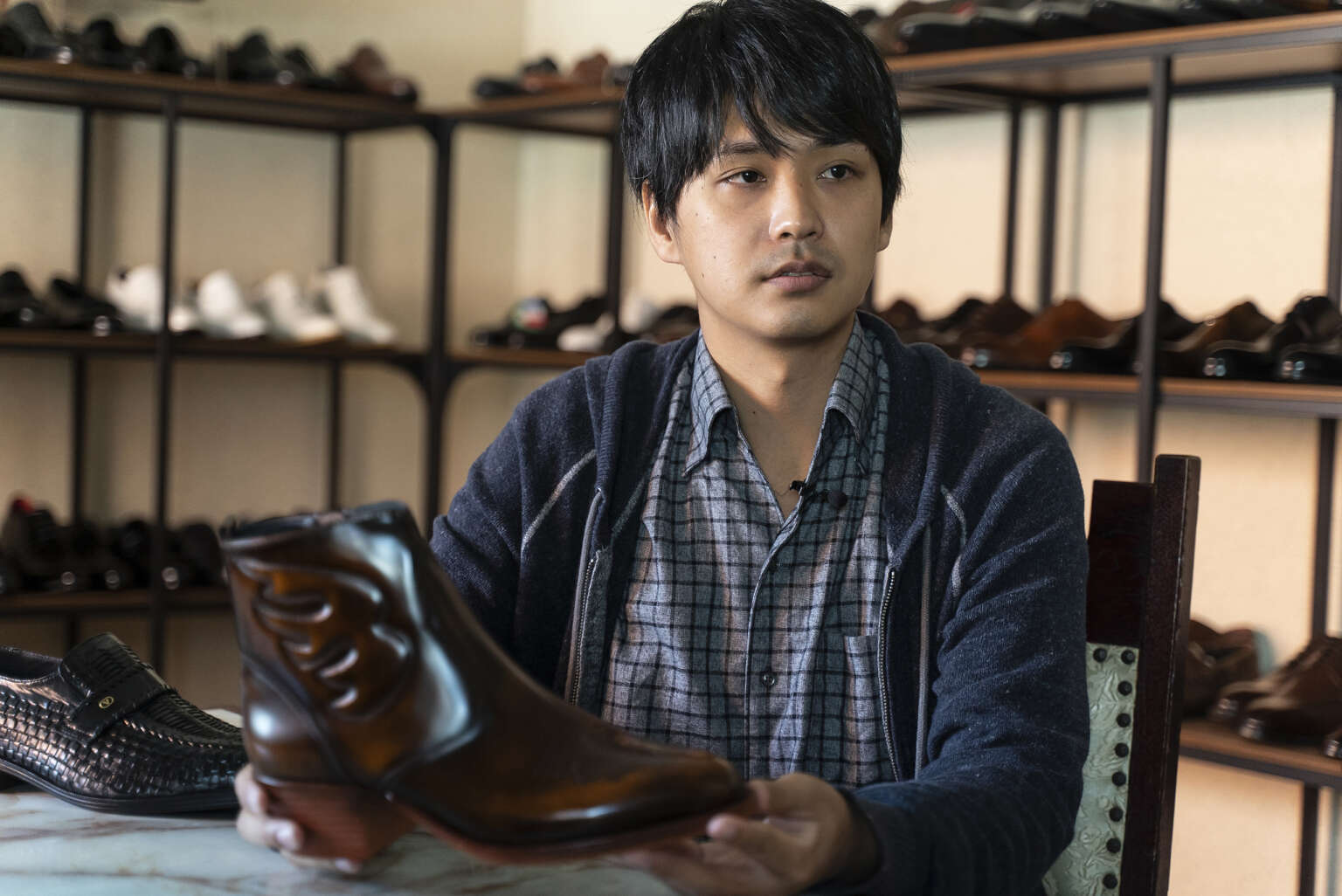
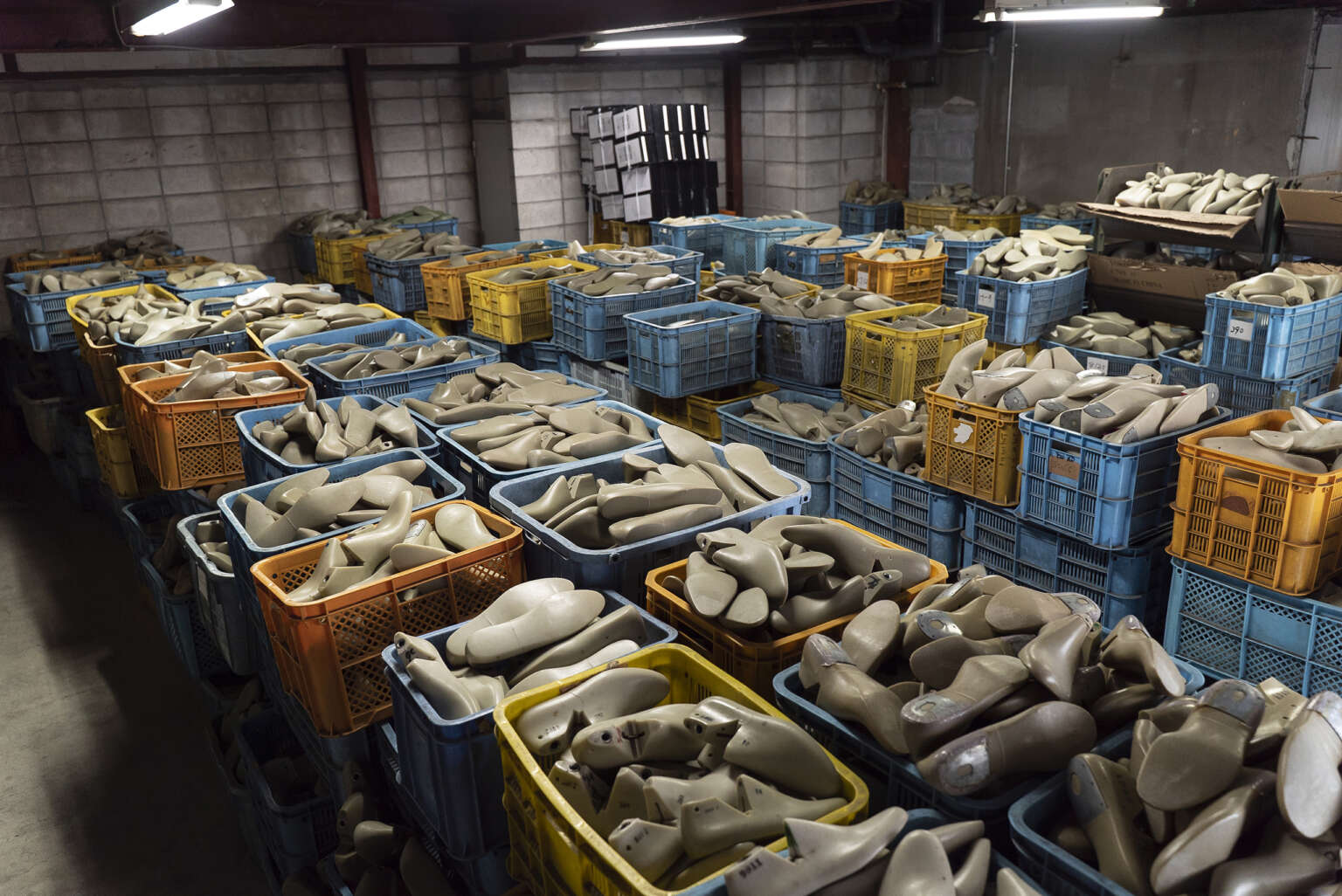
The last brand — and one no story of Thunder Trading can leave out — is 〈TEXAS VILLAGE〉. Designed more than forty years ago on lasts shaped for Japanese feet, with water-repellent treatments and excellent cushioning, it has won a huge following. Western boots are typically defined by elaborate embroidery, but TEXAS VILLAGE keeps its detailing relatively understated; the casual, wearable-every-day design is another reason for its popularity. There was even a time when people would say "the Thunder of western boots" — TEXAS VILLAGE became one of Thunder Trading's signature brands. The designs have stayed almost unchanged since launch, and the line includes 6E-wide lasts, an unusually broad fitting for a western boot.
Together these four brands cover every situation, fitting closely around the wearer's lifestyle.
Careful shoemaking that scales from mass production down to small batches
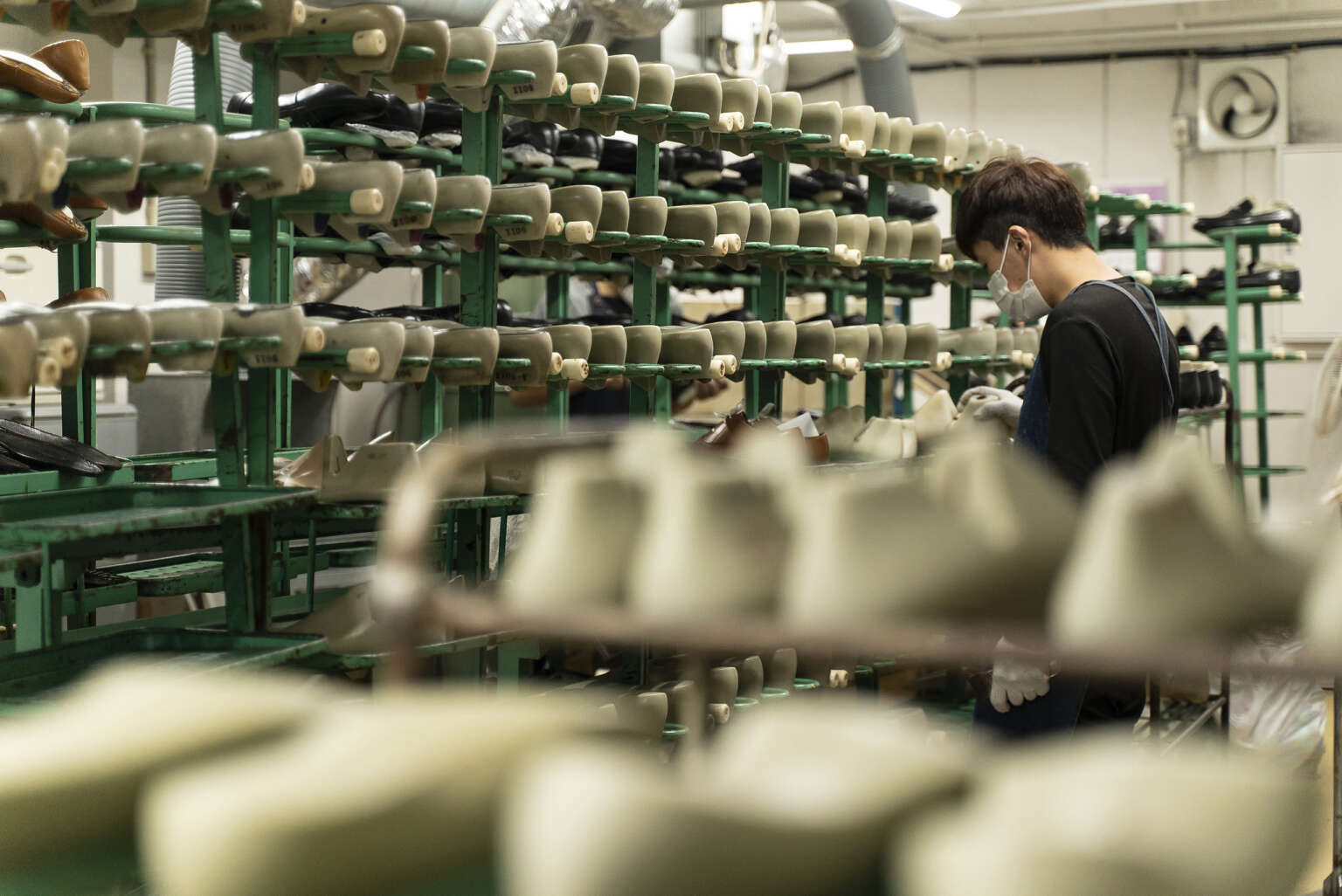
From pantaloon shoes to mesh shoes to western boots, Thunder Trading has produced a hit for every era — and underpinning each is the steady skill of its craftspeople. Today the company runs two parallel models: a fully "All Made in Japan" line in which every step is completed in-house, and a "Half Made in Japan" line where parts produced overseas are finished and fine-tuned in Japan. Either way, the work cannot be done without artisan skill and experience. The hand-finished pairs and the volume-produced ones alike rely on know-how that has been passed down from one generation of craftspeople to the next. Drawing on that to the fullest, Thunder Trading flexibly handles everything from the high-volume work of major brands to the small-batch needs of independent boutiques — earning the deep trust of its clients along the way.
From a single neighbourhood, a new challenge — with a wish for the whole industry's growth.
Thunder Trading runs a range of initiatives to promote Asakusa's shoemaking industry at home and abroad. At the local Tamahime Inari Shrine it holds two annual "shoe festivals" of thanks: the "Kon-Kon Shoe Market" each April and the "Kutsu-no-Megumi Festival Market" each November. More than thirty neighbouring makers join in, and well over 100,000 pairs of shoes and related goods are sold at special prices — drawing a huge response. At the Kutsu-no-Megumi market, the "Japan Shoes Best Dresser Award" picks celebrities who wear leather shoes especially well, and the Craftsman Division of the same award sets out to discover and nurture the next generation of shoe designers — initiatives that lift the whole industry. While continuing its work for the future of leather footwear, Thunder Trading is now striving toward its next step, making active use of the internet and social media to spread leather shoes further and broaden the reach of its in-house brands. The shoes that have coloured every era of Thunder Trading look set to take another leap forward.