Bringing the sharing model — now spreading worldwide — to the workshop too.
The "sharing economy" — services that share things, spaces and skills — is drawing attention all over the world, and in Japan home-sharing, food delivery, car-sharing and household-help services have all moved firmly into the mainstream, with the market growing steadily and new offerings appearing all the time. In an era when "sharing" has reshaped both how we work and how we consume, Takeda Seika has chosen a fitting form: a members-only share workshop. Each craftsperson joins as a member and gets on with their own work, side by side with others, day after day.
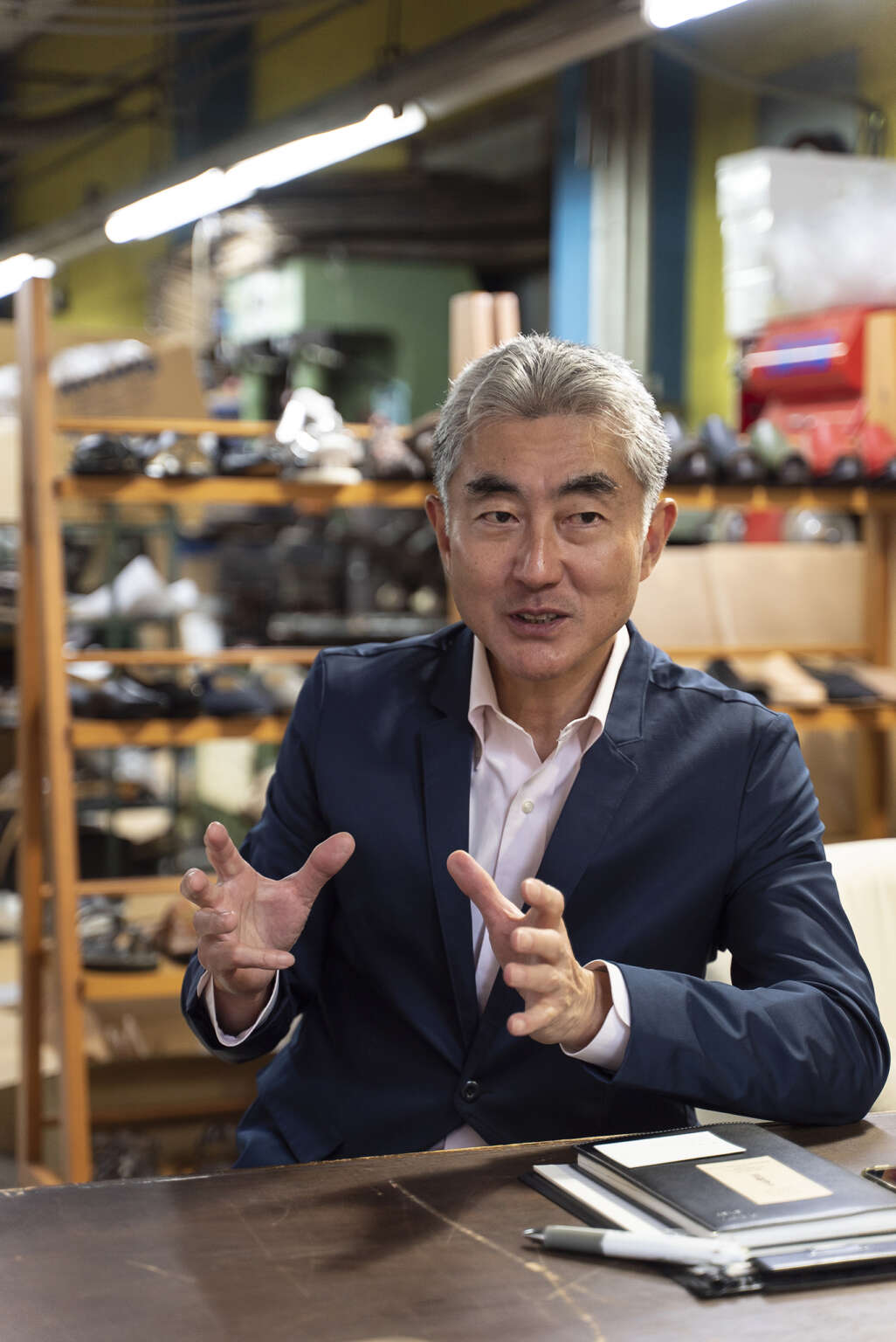
Takeda Seika relaunched itself as "Share Factory Asakusa" in 2012. At the time a handful of shared offices were opening in Japan, but the very idea of sharing had not yet taken hold. In Silicon Valley, however, the sharing economy was already expanding — and with that foresight, President Kazuyoshi Takeda brought the Share Factory model to Takeda Seika. He reflects on those days: "For more than twenty years I had felt it was wasteful for everyone to own their own fixed assets, and I thought sharing was simply the obvious answer. But at that point Takeda Seika still employed its own artisans, so I couldn't simply pivot to a share factory overnight."
A flexible business model — one that stays close to the times.
Takeda Seika was founded back in 1947. Roughly thirty years after President Takeda became its second-generation head, the company has gone through a series of shifts on its way to today's shared workshop model. It originally produced its own men's and women's lines for wholesale; later it pivoted to an SPA (manufacturing-and-retailing) model, eventually operating up to about twenty stores. It then moved towards an experience-economy approach, offering made-to-order shoemaking sessions inside the workshop itself — a draw that brought visitors from all across Japan. "It might look like we keep doing unusual things," President Takeda says, "but we're really just riding the global currents of the time."
Sensing the sharing-economy wave before most, President Takeda began thinking through a new set of values to replace the mass-production model that was moving overseas. Over time he helped the artisans on his team go independent, and then opened "Share Factory Asakusa" — a private share workshop, still rare in Japan. Enquiries and visit requests poured in from across the country, and at its peak the workshop grew to nearly twenty members. Once again, Takeda Seika was in the spotlight.
A varied membership that extends beyond shoemakers alone
Memberships are organised by time. Six tiers are offered: the "All-Day" plan with full access from 9 am to 11 pm; a "Weekday" and a "Weekend/Holiday" plan that cover the same daily hours; a "Daytime" plan from 10 am to 5 pm; and an "Evening" plan from 5 pm to 11 pm. With so many options, member craftspeople can pick whatever suits their schedule. Some run their own leather brands; others are honing their skills while still employed elsewhere, working toward going independent — each focused, in their own way, on the work in front of them.
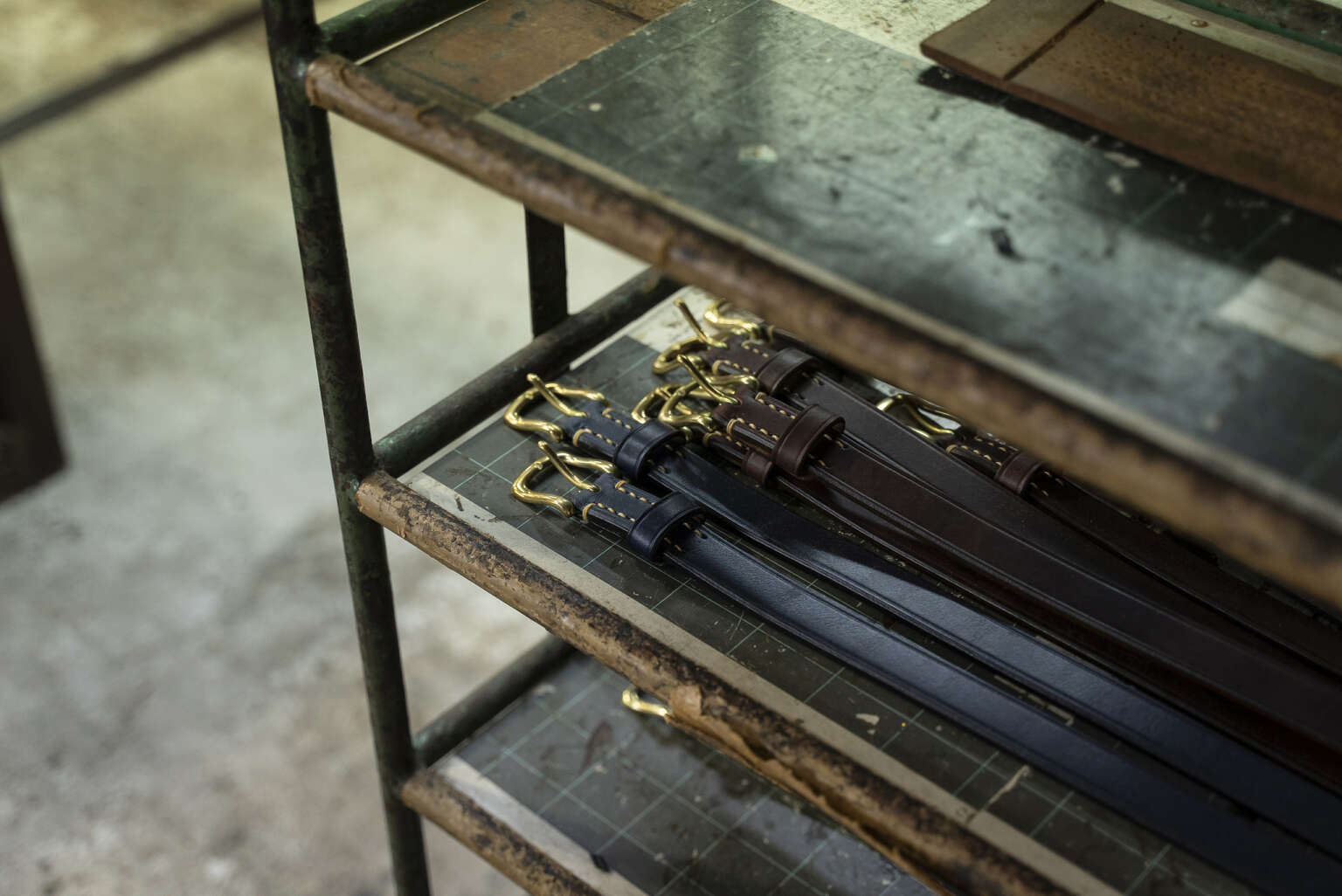
Not just anyone can become a Share Factory member: you need to be able to produce a finished pair on your own and deliver to your own clients, and an interview with President Takeda decides whether you formally join. Members aren't limited to shoemakers — any professional in a related field can apply. "We've had craftspeople who make belts and wallets, and at one point a member running a one-person trading business," he says. "When another member needed hard-to-find materials, the trader would draw on his network and source them. We've also had jewellery and hat makers — work gets passed between members, and new flows start. There are detailed rules for the workshop, but in the main everyone is responsible for themselves. They're all sole proprietors, so it would be rude of me to interfere more than necessary. Mutual respect is what makes this a sustainable business."
Like a gathering of like-minded heroes, sharing knowledge and craft.
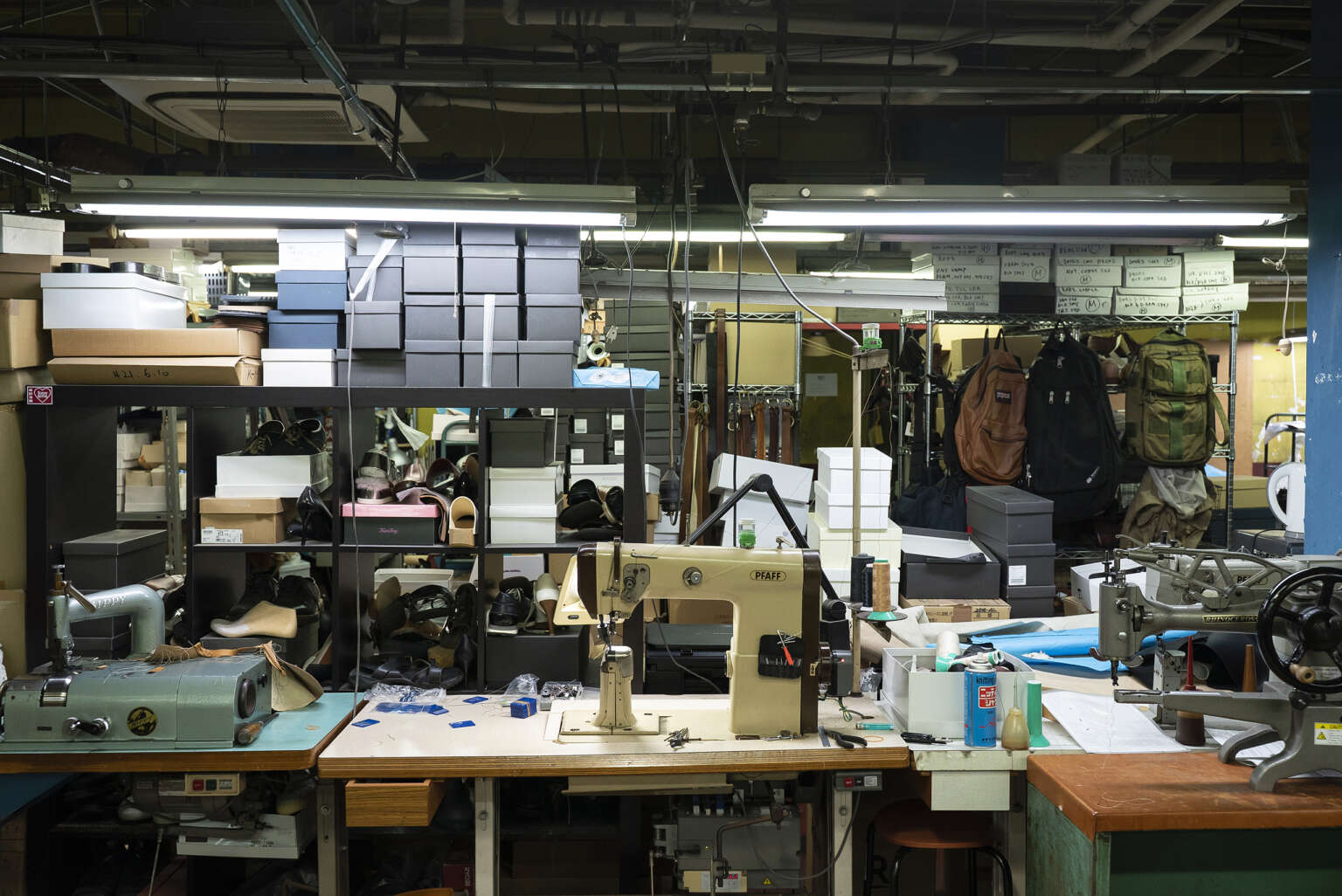
Members of Share Factory Asakusa get their own work bay roughly six tatami-mats in size, plus access to the sewing and bonding machines and other key equipment that Takeda Seika owns — removing the heavy up-front cost of setting up a workshop. That is a real attraction for ambitious young craftspeople, and it helps nurture the next generation of Asakusa's shoemaking tradition. President Takeda points to another benefit unique to Share Factory: "From day one I pictured this place as a kind of Liangshan Marsh — somewhere members can share information and skills and push each other to grow. When you go independent and work alone, there's no one to consult; you can end up wondering whether what you're doing is really right. Here, every member is a business owner in their own right, and we relate to each other as equals — we share our thinking. Now and then we hold drinks together as a way to mix; sometimes I even hold forth on my own management philosophy (laughs). It's close to the sharing-economy thinking from Silicon Valley, with a strong dose of the Eastern idea of sharing things equally and treating everyone with the same respect."
Just as President Takeda had hoped, the exchanges between members have turned out to be invaluable. One former member, setting up a shoe factory overseas, recruited a fellow member as factory manager and they went independent together. Other members already run their own workshops elsewhere, but join the share factory specifically for the connections it offers. Like a small guild, makers serious about their craft gather under one roof and build genuinely good relationships.
Voices of the members who found their way to Share Factory.
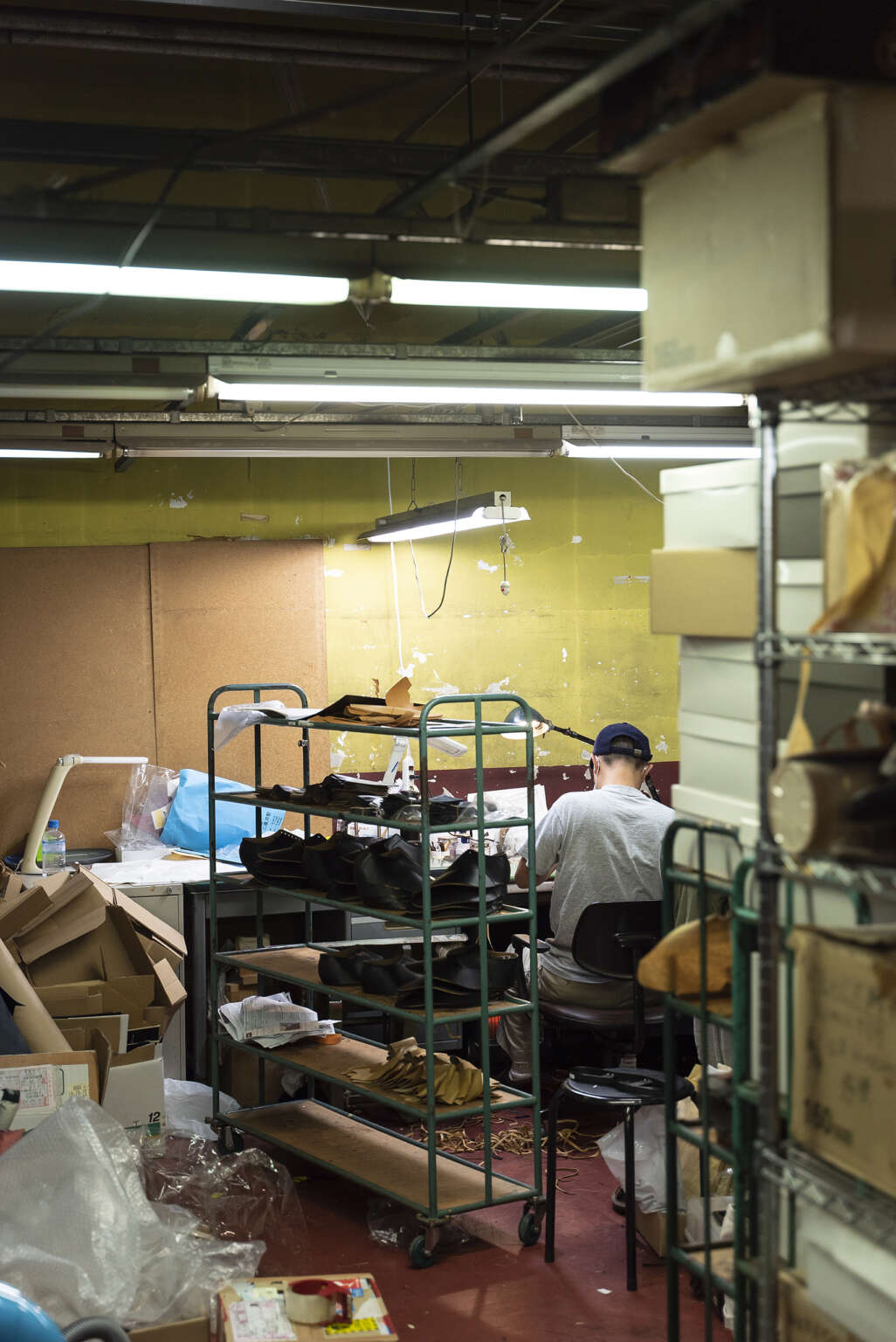
One member at work shares how he ended up here: "Before joining I was working at a shoe-repair shop. I wanted to go independent and looked for a place to set up my own workshop in Asakusa, but the rents were a real worry. Here, there's no equipment cost to get started and I could begin straight away. And there's contact with other craftspeople — we can share who does what specialist work — it really makes for a comfortable place to work." Another member who happened to be there is not a maker but works on the planning and sales side. "I handle planning and sales for leather shoes. I was based in Saitama at my previous job but spent every day in Asakusa, sourcing materials and visiting craftspeople. When I started thinking about going independent, a friend who was already a member here invited me in. There are so many material suppliers and wholesalers in Asakusa that getting around is much easier now, and I've made more contacts in Asakusa even outside this space. I also learn a lot from being able to ask the other members when there's something I don't know."
Entrusting the future of Asakusa's leather industry to the young and the connections between them.
Japan's shoemakers are ageing, and the industry is shrinking under pressure from low-cost overseas production. Yet some of the country's finest skills survive in Asakusa. To carry that light forward, Takeda Seika has built an environment where younger artisans can come in and get started. Originally the company wanted, more than anything, to deliver carefully made in-house products and bring joy to wearers — but its wish to keep shoemakers themselves alive ran even deeper, and the share factory was the answer. With members across shoemaking and many adjacent disciplines gathering side by side and deepening their connections, what lies ahead is something a mass-produced overseas product can never offer: a renewed lift for Asakusa's leather industry and its culture of making.